What a construction company website needs
A construction company's site speaks to two people at once: the buyer thinking about a home, and the investor, supplier or partner thinking about working with the firm. Both ask the same question: can I trust this company? Below are the parts of such a site, with examples from projects I built.
The site's job: earning trust
A home is one of the largest purchases people make. Visitors usually arrive from an ad, a site hoarding or a recommendation, and decide within seconds whether the firm is serious.
So every section should be judged by one question: does this screen build trust in the company? Restrained design, clear facts and real projects earn more trust than big slogans.
First screen: who the firm is and what it does
The home page's first screen should say at a glance who the company is and what it does. For groups working in several fields this matters even more: the visitor should see the group's breadth without getting lost.
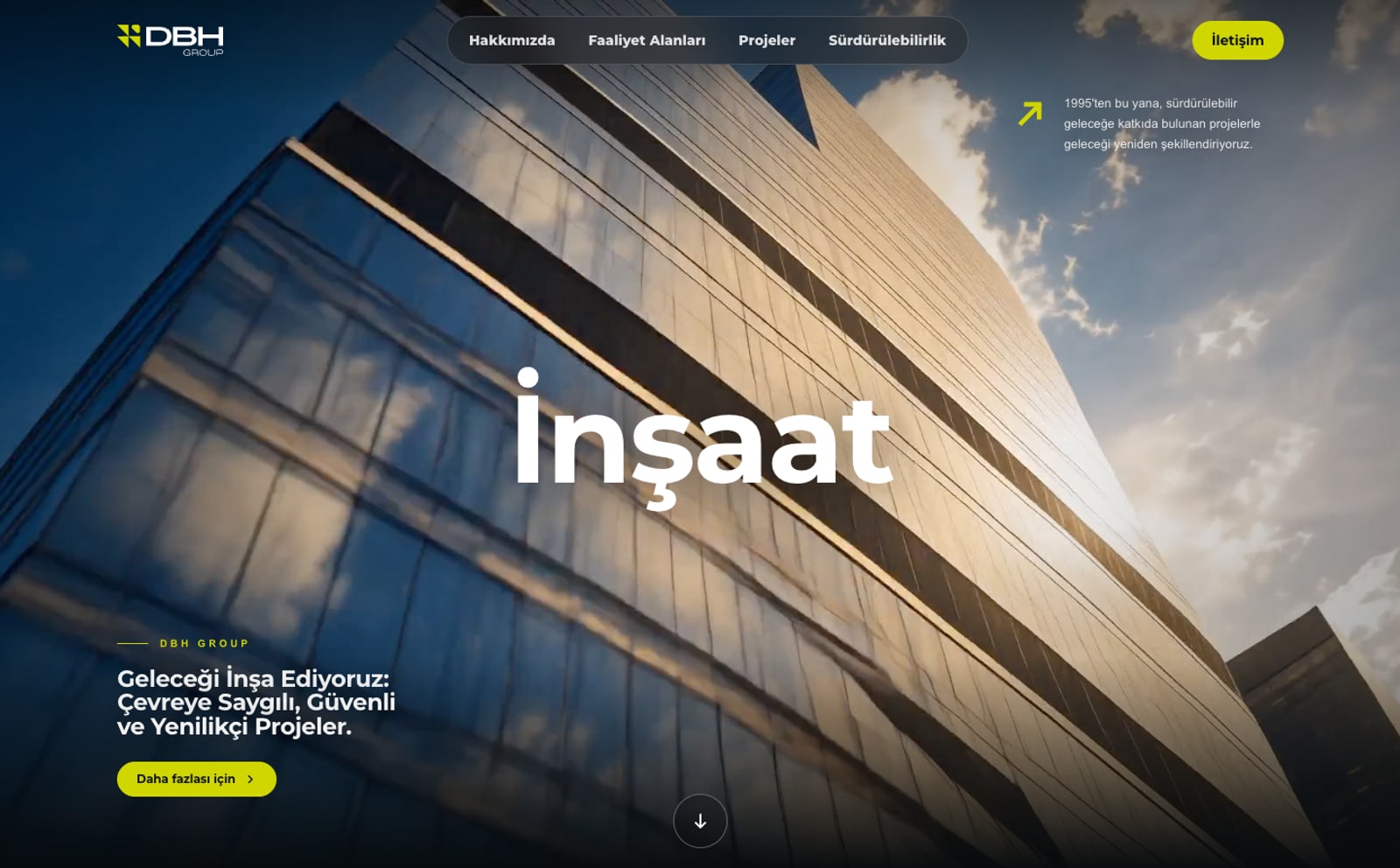
On the DBH Group home page the group's logo assembles from a mosaic and becomes the stage; then, as you scroll, its six fields (construction, real estate, mining, technology, energy and tourism) flow by as full-screen sections. The visitor sees what the group does without opening a menu.
Projects: ongoing and delivered
The projects page is the heart of the site. Projects on sale, under construction and delivered should be visible separately. Delivered projects should be shown with real photos; renders are for projects not yet built.
Each project needs its own page: location, homes and blocks, floor plan types, status and delivery date. If a large project has its own launch site, the project page should link to it.
A project page should work like a launch site
On the corporate site built for The Lock Adres Barbarossa, the project's architecture of stone, light and water sets the tone: a sunset opening, measured type and a clean flow carrying the project, the location, the films and the e-catalogue. 4 blocks, 286 homes and 100 commercial units are part of the first telling.
On A'lâ Çekmeköy Nefes the project film advances with the scroll; 14,300 m² of land, 9 blocks and 72 homes appear on glass panels, and the enquiry form is always at hand. What the two share: the figures are on the page, not in a PDF.
Company facts: show who you are
The about page tells the company's history, management, fields of work and values. Certificates, memberships and partners, if any, should appear in a way that can be checked.
Address, phone and map should be one click from every page. A real office address and a phone that gets answered are the simplest signs of trust.
The way to the sales office
Every project page should show an enquiry form, a phone number and WhatsApp. Keep the form short: name, phone, email and the project or home type of interest is usually enough.
The sales team should see which project and which source (ads, social, search) an enquiry came from, so it is clear which project and which channel bring enquiries.
Fast on phones, cinematic but not heavy
A large share of visitors open the site on a phone, from ads and social media. Film and motion can make a project felt, but they must run smoothly on phones and lighten on weaker devices.
A beautiful site that opens late loses the visitor before the first screen.
Being found in search
People find the firm by name, and its projects with searches like “project name + district”. Each project page needs its own title, description and structured data; images need alt text, and the sitemap should be submitted to Google Search Console.
Checklist
Before a construction company site goes live:
- The first screen says who the firm is and what it does.
- Projects on sale, under construction and delivered are shown separately.
- Delivered projects have real photos.
- Each project's figures, status and delivery date are on its page.
- Address, phone and map are one click from every page.
- Every project page has a short form, a phone number and WhatsApp.
- The site opens fast on a phone.
- Each project page's title and description are written for search.
Short answers
One corporate site, or a site per project?
For most firms, both: the corporate site tells the company and all its projects, and each major project on sale gets its own launch page or site. The project page on the corporate site links to it.
Why do completed projects matter?
The biggest question a buyer or investor has is whether the firm keeps its word. Delivered projects, with real photos and delivery years, answer it most clearly.
Should prices be on the site?
That depends on the firm's sales policy. If prices aren't shown, the form or phone for price information should be visible on every project page.
Topics
- construction company website
- property developer website
- construction website design
- real estate developer website
- builder website examples
- construction company web design